Exercise Categories: Strength - Endurance - Flexibility - Fitness Equipment
Find your desired exercises by choosing between the following main categories:- Strength Training - exercise guide to gym, home or office as well as outdoor strength training.
- Endurance Training - exercise guide to cardiovascular training.
- Flexibility Training - exercise guide to stretching and enhanced flexibility.
- Fitness Equipment Guide - exercise guide to different (home) fitness equipment.
Exercise Ranking
Top 5 Strength-Training Exercises
49280 views
44046 views
44165 views
58097 views
27868 views
Top 5 Endurance-Training Exercises
25313 views
24363 views
22875 views
32116 views
25525 views
Top 5 Flexibility-Training Exercises
19159 views
17639 views
27970 views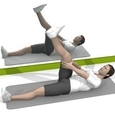
16084 views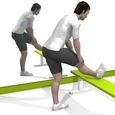
29760 views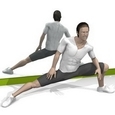
Exercise Guide
The Fitness Exercise Guide is very simple to use: Clicking on the desired category in the green navigation bar displays a list of the most relevant exercises. You can adjust the criteria of the sort with the above drop-down menu.Muscle group, muscle and equipment are being displayed in the left side menu, which allows a comfortable browsing through all fitness exercises.
Exercise descriptions contain all important information on the correct execution:
- Animated exercise perspective view or still picture perspective view
- Classification by type of exercise, force direction and equipment and tools
- clear instructions, explaining the initial preparation, proper execution and optional variations / comments
- views of the most significant positions, mostly starting and ending position
- detailed information on the muscles involved, sorted by target muscle(s), synergist(s) and stabilizer(s)
Search and Advanced Search
Find fitness exercises quickly and easily by using the search box in the header of each page. It allows text input to search the entire site. On top of that you may want to use the Advanced Search to filter all available for more detailed results.Glossary
Exercises
| Classification | Description | |
|---|---|---|
| Type | Basic |  When browsing the Exercise Guide, basic exercises carry a larger blue square in front of the exercise name. They are characterized as principal exercises that involve more muscle groups than auxiliary exercises or need a higher overall stabilizing tension force. When browsing the Exercise Guide, basic exercises carry a larger blue square in front of the exercise name. They are characterized as principal exercises that involve more muscle groups than auxiliary exercises or need a higher overall stabilizing tension force. |
| Auxiliary |  Auxiliary exercises carry a smaller blue square in front of the exercise name. They are optional exercises that can place high intensity one particular muscle. Auxiliary exercises carry a smaller blue square in front of the exercise name. They are optional exercises that can place high intensity one particular muscle. | |
| Mechanics | Compound | Compound exercises, sometimes also called complex exercises, include two or more joint movements. |
| Isolated | Isolated exercises include only a singe joint movement, therefore they isolate the specific responsible muscle. | |
| Direction | Push | A pushing motion is a movement away from the center of the body during the concentric contraction of the target muscles involved. |
| Pull | Pulling motions move toward the center of the body during the concentric contraction of the target muscles involved. |
Muscles
| Muscles | Description | |
|---|---|---|
| Function | Target | The target muscle is the primary muscle used during an exercise. |
| Synergist | Synergists support the target muscles. | |
| Stabilizer | Stabilizing muscles contract during an exercise, but only for stabilizing purpose without significant motion. |